
HECM for Purchase Pros and Cons: A REALTOR® Guide
HECM for Purchase pros and cons are worth understanding if you’re a REALTOR® working with older homebuyers. The program can open doors to some interesting possibilities, but it also comes with costs, limitations, and a few surprises.
What if your older homebuyer could purchase the home they really want without committing all their available cash or taking on required monthly principal and interest payments?
That’s one of the possibilities worth exploring with a HECM for Purchase.
I’ve encountered people who used this program to buy bigger homes, move closer to friends, relocate to warmer climates, and keep more of their home-sale proceeds available for the things they wanted to do in retirement.
I’ve also seen transactions fall apart because the property didn’t meet the necessary requirements.
So, is HECM for Purchase a great option or a bad idea?
Well, that depends. (I know, not the most exciting answer. But it’s the right one.)
The truth is that HECM for Purchase has some meaningful advantages, some legitimate disadvantages, and a few supposed disadvantages that deserve a closer look.
For REALTORS® working with older homebuyers, understanding the difference can help you recognize opportunities, ask better questions, and avoid surprises during a transaction.
Let’s sort through the pros, the cons, and a few things that really aren’t cons at all.
Understanding the HECM for Purchase pros and cons starts with separating genuine drawbacks from common misconceptions. And believe me, there are a few misconceptions worth clearing up.
About the stories: The following scenarios are based on situations I’ve encountered in my work with reverse mortgages. Certain details have been changed or omitted to protect client privacy. They’re intended to illustrate possible situations, not promise similar results.
First, What Is a HECM for Purchase?
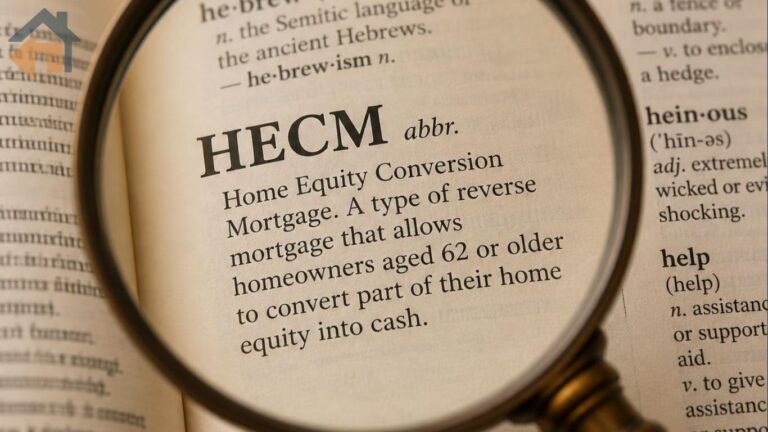
A Home Equity Conversion Mortgage (HECM) for Purchase is an FHA-insured reverse mortgage that allows eligible buyers age 62 or older to purchase a principal residence.
The buyer contributes a required amount of their own money, and the HECM finances part of the purchase.
Unlike a traditional forward mortgage, a HECM doesn’t require monthly principal and interest payments while the borrower meets the loan’s terms.
That doesn’t mean the money is free. Interest and applicable loan charges accrue, and the loan eventually has to be repaid.
Borrowers must also continue paying property taxes, maintaining required insurance, keeping the property in acceptable condition, and meeting the program’s occupancy requirements.
The amount available through the HECM depends on several factors, including the age of the youngest borrower or eligible non-borrowing spouse, applicable interest rates, the property’s value, and FHA program limits.
Buyers must also complete required counseling with a HUD-approved HECM counselor. You can learn more about the program, its requirements, and consumer protections on HUD’s official HECM information page.
Now that we’ve covered the basics, let’s get to the interesting part.
The Pros of HECM for Purchase
Pro #1: No Required Monthly Principal and Interest Payments
This is usually the first feature that catches people’s attention.
With a traditional mortgage, buyers generally take on a monthly principal and interest payment. With a HECM for Purchase, those payments aren’t required as long as the borrower complies with the loan’s terms.
For someone living on Social Security, pension income, retirement savings, or a combination of these, reducing required monthly expenses may be appealing.
Of course, homeowners still have property taxes, insurance, utilities, maintenance, and possibly association dues.
The mortgage payment may be gone, but the electric company hasn’t become a charity.
And because interest continues to accrue, the absence of required monthly payments shouldn’t be confused with the absence of borrowing costs.
REALTOR® Takeaway
If an older buyer is concerned about taking on another monthly mortgage payment, HECM for Purchase may be worth introducing as an option to discuss with a qualified lender.
Pro #2: Retirement Doesn’t Always Mean Downsizing
The California-to-Idaho Move
I encountered a retired gentleman who decided to leave California and relocate to Idaho.
You might assume he wanted to downsize. After all, that’s what retirees are supposed to do, right?
Not this gentleman.
Using a HECM for Purchase, he bought a home in Idaho that was approximately twice the size of his previous home.
So much for the idea that retirement automatically means less square footage.
His situation illustrates how differences between housing markets, combined with HECM financing, may give some buyers additional options.
Of course, the program doesn’t magically double anyone’s purchasing power. The numbers still have to work, and the buyer must meet the applicable requirements.
But retirement housing isn’t always about buying less.
Sometimes it’s about buying something different, or even something bigger.
REALTOR® Takeaway
Don’t assume an older buyer wants a smaller or less expensive home. Ask what they want their next home to accomplish.
Pro #3: Buyers May Keep More of Their Home-Sale Proceeds
Rightsizing in Meridian, Idaho
One woman I encountered had lived in her Boise home for years.
She decided it was time for a change and found a home in a 55+ community of duplexes in nearby Meridian.
After selling her Boise home, she used part of the proceeds toward the purchase of her new home, financing the balance through a HECM for Purchase.
Here’s the interesting part.
After making the required investment in her Meridian home, she still had $100,000 remaining from the sale of her Boise property.
And she had plans for that money.
She wanted to visit the grandchildren who didn’t live nearby.
I like this example because it shows that downsizing isn’t necessarily the goal. Sometimes rightsizing is a much better description.
She wasn’t simply trying to purchase a smaller home. She was making a housing decision that supported how she wanted to spend her retirement.
One important clarification: The HECM didn’t give her $100,000 in cash. That money came from selling her previous home. Using HECM financing for the new purchase allowed her to retain that portion of the proceeds rather than putting it all into the new property.
Not everyone will have the same result, of course. The amount a buyer may retain depends on the sale proceeds, purchase price, required investment, closing costs, and individual circumstances.
The bigger lesson is that retirement housing decisions should start with the life a buyer wants to live, not simply the price of the next home. I’ve explored this idea further in my article about helping older buyers live better with HECM for Purchase.
REALTOR® Takeaway
When a client talks about downsizing, ask what they’re actually trying to accomplish. Less maintenance? More travel? A different location? More available cash?
The answer may be more interesting than the number of bedrooms.
Pro #4: HECM Financing May Help With Major Life Changes
Two New Beginnings After a Divorce
I encountered a retired couple who decided to divorce amicably.
They had different ideas about where they wanted to spend their retirement years.
He loved the snow where they lived.
She’d had quite enough of winter and wanted to move somewhere warmer.
He used a reverse mortgage on their existing home to access funds that helped satisfy the financial settlement with his former wife, allowing him to remain in the home.
She used the money she received toward purchasing a condominium in an Arizona retirement community where she already had friends.
Rather than buying the condominium entirely with cash, she made the required investment and financed the remaining purchase amount through a HECM for Purchase.
Two people, two different retirement plans, and two different housing solutions.
Naturally, divorce settlements, property ownership, mortgage obligations, and reverse mortgage eligibility can involve significant legal and financial considerations. These arrangements require coordination with qualified attorneys, lenders, and other appropriate professionals.
But this situation illustrates something worth remembering.
Not every retirement move is planned years in advance. Sometimes life changes, and housing needs change right along with it.
REALTOR® Takeaway
A major life transition may be an appropriate time to introduce additional housing-financing options, without attempting to determine whether a particular option is suitable.
Pro #5: FHA Insurance Includes Important Consumer Protections
A HECM for Purchase is an FHA-insured reverse mortgage.
That means the program includes protections that are worth understanding.
One is its non-recourse feature. Generally, the borrower or estate isn’t personally responsible for a deficiency beyond the protections established under the HECM program.
That doesn’t mean the home automatically passes to heirs free and clear, or that the loan balance simply disappears.
The loan must still be resolved when it becomes due, subject to applicable program rules and protections.
Another important requirement is independent counseling with a HUD-approved HECM counselor.
Counseling helps prospective borrowers understand how the loan works, including its costs, obligations, and alternatives.
Any fair discussion of HECM for Purchase pros and cons should distinguish between actual program limitations and the ordinary responsibilities that come with owning a home.
REALTOR® Takeaway
Know that these protections exist, but leave explanations of specific repayment, inheritance, and legal consequences to qualified professionals.
Cons That Really Aren’t Cons
Now we get to a few criticisms that I think deserve a closer look.
Reverse mortgages have attracted plenty of criticism over the years. Some of it is justified. Some of it comes from misunderstandings. And some of it involves responsibilities that apply to practically every homeowner.
Let’s separate those things.
“You Still Have to Pay Property Taxes and Insurance”
This one has always puzzled me.
One criticism I frequently hear about reverse mortgages is that homeowners must continue paying property taxes, maintaining homeowners insurance, and keeping their property in good condition.
My response is pretty simple:
How is that different from owning a home with a traditional mortgage?
It isn’t, at least when it comes to those basic responsibilities.
A homeowner with a traditional mortgage must also pay property taxes, maintain required insurance, and comply with the property’s maintenance obligations.
And what happens if they don’t?
They can face mortgage default and potentially foreclosure.
Failing to pay property taxes can even lead to foreclosure when a home is owned free and clear.
Last time I checked, the county assessor doesn’t give you a pass on property taxes just because you paid cash for your house.
A HECM has its own contractual requirements and procedures, of course. Failure to meet those obligations can cause the loan to become due and payable and potentially lead to foreclosure.
But presenting ordinary homeownership responsibilities as though they’re unique disadvantages of reverse mortgages creates a misleading comparison.
The real difference is that a HECM doesn’t require monthly principal and interest payments while the borrower meets the loan’s terms.
That doesn’t make homeownership free, and it doesn’t eliminate the costs of maintaining a property.
It simply changes how the home purchase is financed.
REALTOR® Takeaway
When comparing HECM for Purchase with traditional financing, distinguish between obligations that apply to homeowners generally and requirements that are specific to the HECM program.
“Some Condominiums Don’t Qualify for HECM Financing”
Yes, condominium eligibility can be a frustrating limitation.
A buyer may find the perfect condo, only to learn that the project doesn’t meet applicable FHA requirements or can’t obtain the necessary approval.
Nobody enjoys hearing that.
But is it always a bad thing?
Not necessarily.
FHA condominium requirements can involve project finances, insurance, property condition, ownership concentration, and other factors.
A condominium that doesn’t qualify isn’t automatically a bad property. Sometimes the issue is administrative or involves a technical requirement.
But sometimes the review process can reveal concerns that deserve attention.
And that brings me to another situation I’ve encountered.
When a Retirement Paradise Becomes Too Expensive
I spoke with a couple in their mid-80s who had moved to a resort town about 20 years earlier.
When they arrived, the community was relatively quiet and affordable.
Over the years, the town became a highly desirable retirement destination.
That sounds wonderful until the bills start arriving.
Their condominium association fees and special assessments had increased dramatically.
By the time we spoke, those expenses amounted to more than twice their combined monthly Social Security income.
And no, they hadn’t purchased the condo using a reverse mortgage.
They were dealing with the costs of condominium ownership in a community that had become increasingly expensive.
We discussed the possibility of selling their condominium and relocating to a more affordable area outside the resort town, potentially using a HECM for Purchase to finance another home.
That was an option to investigate, not a guaranteed solution.
Their situation raises an important question for REALTORS® working with retirement buyers:
Can your client afford not just to buy the home, but to keep owning it?
Condominium dues, reserve funding, insurance costs, maintenance projects, and special assessments can have a major impact on long-term affordability.
FHA condominium requirements can’t predict future fee increases or guarantee that a community will remain financially healthy.
But reviewing a condominium project’s financial and operational circumstances may help uncover certain concerns before a buyer commits to the purchase.
A little red tape today might occasionally save a lot of headaches tomorrow.
Or it might simply be red tape. That’s why it’s important to understand the actual reason a project doesn’t qualify.
REALTOR® Takeaway
Encourage buyers to review association budgets, reserve information, insurance coverage, recent and planned special assessments, major maintenance projects, and other relevant condominium documents with appropriate professionals.
And if the buyer plans to use HECM for Purchase financing, involve the lender early to determine what condominium approval requirements apply.
A retirement home needs to be affordable to purchase, but it also needs to be reasonably sustainable to own.
The Real Cons of HECM for Purchase
Now let’s talk about the genuine disadvantages.
These aren’t necessarily reasons to avoid the program, but they’re important considerations that buyers should understand before moving forward.
Con #1: A Substantial Cash Investment Is Required
HECM for Purchase isn’t a low-down-payment mortgage program.
Buyers generally need to contribute a significant amount of their own funds toward the purchase.
The required investment depends on the buyer’s circumstances, the property, applicable interest rates, and program calculations.
That’s a different proposition from certain traditional mortgage programs that allow relatively small down payments.
For buyers with limited available funds, the required investment may make HECM for Purchase impractical.
REALTOR® Takeaway
Encourage buyers to obtain an individualized financing estimate from a qualified HECM lender before establishing a purchase budget.
Con #2: Upfront and Ongoing Borrowing Costs Can Be Significant
HECM for Purchase comes with costs.
These may include origination fees, closing costs, FHA mortgage insurance premiums, and interest.
Some costs may be financed into the loan, subject to program requirements, but that doesn’t make them disappear.
They become part of the debt.
A buyer who compares only the monthly payment may overlook the total cost of financing.
And that’s not a comparison I’d want anyone making.
REALTOR® Takeaway
Encourage buyers to compare financing options based on more than required monthly payments. A qualified lender and financial professional can help them evaluate the broader costs and implications.
Con #3: The Loan Balance May Grow Over Time
With a traditional amortizing mortgage, regular payments generally reduce the loan balance.
A HECM works differently.
Because monthly principal and interest payments aren’t required, unpaid interest and applicable charges are added to the balance.
Over time, the balance may grow and reduce the homeowner’s remaining equity.
Home appreciation might offset some of that growth, but there’s no guarantee.
Borrowers can make voluntary payments, although they aren’t required to make monthly principal and interest payments while meeting the loan’s terms.
REALTOR® Takeaway
Help buyers understand that eliminating required monthly principal and interest payments doesn’t eliminate interest expense.
Con #4: Property Requirements Can Disrupt a Transaction
When the Coastal Dream Home Doesn’t Work Out
I’ve encountered couples without children who wanted to purchase their ideal retirement home along the coast.
They found homes they loved and wanted to make the move.
Some of those HECM for Purchase transactions went through without significant difficulty.
Others didn’t.
Problems involving appraisals or property inspections prevented certain transactions from proceeding.
And that’s a tough conversation when buyers have already pictured themselves enjoying their new home.
Unfortunately, falling in love with a house doesn’t mean the appraiser will fall in love with it, too.
A HECM for Purchase property must meet applicable FHA and lender requirements.
The FHA appraisal addresses valuation and relevant property standards. A separate home inspection may identify additional concerns, but the two serve different purposes.
Depending on the issue, repairs or additional documentation may be necessary. Some problems can be resolved, while others can prevent the purchase.
This is a genuine disadvantage because a buyer may be financially qualified but unable to use HECM financing for a particular property.
REALTOR® Takeaway
Identify potential property concerns early, and coordinate with the lender before your client becomes too invested in a home that may not qualify.
Con #5: The Program May Not Fit Every Long-Term Plan
HECM for Purchase is intended for purchasing a principal residence.
It’s not designed to finance vacation homes or investment properties.
If the buyer expects to move again soon, upfront borrowing costs may make the program less appealing.
If preserving as much home equity as possible for heirs is a priority, the possibility of a growing loan balance deserves careful consideration.
And if the buyer’s future housing arrangements are uncertain, occupancy and repayment requirements become especially important.
REALTOR® Takeaway
Ask about the buyer’s housing goals and anticipated plans, but refer questions about financial suitability, estate planning, and loan terms to qualified professionals.
HECM for Purchase vs. Cash vs. a Traditional Mortgage
So how does HECM for Purchase compare with other ways to buy a retirement home?
Here’s a simplified look.
| Consideration | Cash Purchase | Traditional Mortgage | HECM for Purchase |
|---|---|---|---|
| Initial cash required | Full purchase price plus costs | Down payment and costs | Substantial buyer investment and costs |
| Required monthly principal and interest | None | Generally yes | No |
| Interest expense | None on purchase financing | Yes | Yes |
| Loan balance | None | Generally declines with scheduled payments | May grow without voluntary payments |
| Remaining available cash | Depends on purchase price | Depends on down payment | Depends on required investment |
| Minimum borrower age | None | None | Generally 62 |
| Principal residence requirement | Not generally | Depends on loan type | Yes |
Each approach has advantages and disadvantages.
A cash purchase avoids mortgage interest but may tie up a significant amount of available money in the home.
A traditional mortgage may allow a smaller initial investment, but it generally requires monthly principal and interest payments.
A HECM for Purchase may eliminate those required monthly payments while allowing some buyers to retain more available cash, but it comes with substantial initial investment requirements and borrowing costs.
There’s no universal winner.
And if someone tells you there’s one financing solution that’s perfect for every retiree, I’d suggest asking a few more questions.
What Should REALTORS® Be Watching For?
You don’t need to become a reverse mortgage expert.
You do need to recognize when a client might benefit from learning about another financing option.
Pay attention when an older buyer mentions wanting to:
- Relocate closer to children, grandchildren, or friends.
- Purchase a more suitable home without committing all available savings.
- Reduce required monthly housing payments.
- Move to a different housing market.
- Purchase in a 55+ community.
- Right-size their home while retaining some sale proceeds.
- Explore housing options after a divorce or other major life change.
These aren’t signs that someone automatically qualifies for HECM financing.
They’re reasons to ask better questions.
You might say:
“Have you looked into all the financing options available to homebuyers age 62 and older? There’s a program called HECM for Purchase that works differently from a traditional mortgage. It isn’t right for everyone, but it might be worth a conversation with someone who specializes in it.”
That’s all you need to do.
You’re not recommending a particular loan, determining eligibility, or making financial promises.
You’re introducing a possibility.
What REALTORS® Should Never Promise
A little knowledge is useful. A little knowledge combined with too much confidence can create problems.
When discussing HECM for Purchase, avoid promising that a buyer will qualify based solely on age or available equity.
Don’t quote a required investment based on a general percentage you’ve heard somewhere.
Don’t guarantee that a particular property will qualify, that the transaction will close by a certain date, or that the buyer’s heirs will receive a particular amount of equity.
And don’t interpret loan documents or attempt to replace the work of a qualified HECM lender or HUD-approved counselor.
Your role is to recognize, communicate, coordinate, and refer.
That’s already plenty.
HECM for Purchase Pros and Cons: The Bottom Line
After weighing the HECM for Purchase pros and cons, I keep coming back to one observation: The program’s real value may be the additional choices it gives some older homebuyers.
The real value of HECM for Purchase isn’t necessarily that it eliminates required monthly principal and interest payments. It’s that it may give some older homebuyers choices they didn’t realize they had.
The gentleman moving from California to Idaho wanted a larger home.
The woman moving from Boise to Meridian wanted a home that better suited her life, along with money left over to visit her grandchildren.
The woman relocating to Arizona after her divorce wanted a fresh start in a warmer climate near friends.
The couples looking at coastal homes wanted to enjoy retirement in a place they loved, even though property-related problems prevented some transactions from moving forward.
And the couple facing overwhelming condominium fees in a resort town reminded me that housing affordability doesn’t end on closing day.
Different people. Different priorities. Different housing challenges.
That’s why I don’t believe HECM for Purchase should be presented as the answer for every older buyer.
It shouldn’t.
But I do believe REALTORS® who work with older homebuyers should understand enough about the program to recognize when it might deserve a closer look.
Because sometimes the most valuable thing you can do for a client isn’t to have all the answers.
It’s to know there’s another question worth asking.
Learn More About HECM for Purchase
The HECM Coach provides practical education for REALTORS® and other real estate professionals who want to better understand reverse mortgages and HECM for Purchase.
Our goal isn’t to turn REALTORS® into mortgage specialists.
It’s to help you recognize potential opportunities, understand common transaction challenges, and know when to involve qualified professionals.
Explore [HECM FOR PURCHASE EDUCATION RESOURCES] to learn more about how the program works and what REALTORS® should know.
This article is for educational purposes only and does not constitute mortgage, financial, legal, tax, or estate-planning advice. HECM eligibility, loan proceeds, property approval, closing requirements, and other terms are subject to applicable FHA program requirements, lender underwriting, and individual circumstances.
This post was written by the founder of HECMCoach.com, a HUD-certified and HECM-certified housing counselor and Accredited Financial Counselor (AFC) through AFCPE. The information in this post is educational and does not constitute financial or legal advice nor does it represent the views of the writer's employer. Readers should consult a licensed mortgage professional and a HUD-approved housing counselor with a HUD-approved housing counseling agency for guidance specific to their situation.